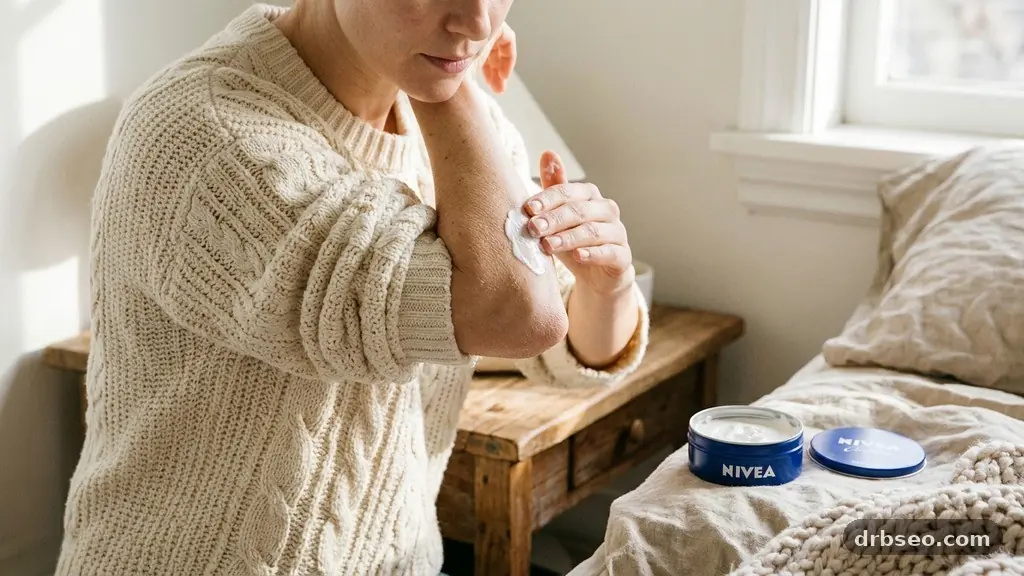
The question behind “I Have Sensitive Skin. How Gentle Are Nivea’s Creams Compared to Aveeno” has no one-size-fits-all answer, because both brands sell several moisturisers with very different formulas. In broad terms, Aveeno often has the stronger reputation for eczema-prone skin because selected products use colloidal oatmeal and fragrance-free formulas, while many classic NIVEA creams contain fragrance and richer occlusive ingredients.
That doesn’t make NIVEA automatically harsh or Aveeno universally perfect. Your skin barrier, trigger history, the exact product, and how you apply it matter more than the logo on the tub. The useful comparison is ingredient by ingredient.
The short answer for sensitive skin
Aveeno is usually the safer first choice for highly reactive or eczema-prone skin, especially when you choose a fragrance-free product containing colloidal oatmeal. That positioning reflects the kinds of formulas Aveeno commonly offers for dryness, itching, and compromised skin barriers.
NIVEA can still be gentle for many people, particularly its fragrance-free or sensitive-skin products. However, several familiar NIVEA creams, including classic rich creams, use perfume and may contain ingredients such as alcohol denat or fragrance allergens that can sting or trigger irritation in some users.
The comparison becomes clearer when the products are separated into categories rather than treated as two single formulas. A fragrance-free Aveeno body moisturiser and a scented NIVEA face cream are not fair equivalents, just as a NIVEA Sensitive product should not be judged by the ingredient list of the classic blue tin.
| Factor | NIVEA creams | Aveeno moisturisers |
|---|---|---|
| Typical soothing focus | Emollients, glycerin, petrolatum, oils, and selected calming ingredients | Often colloidal oatmeal, emollients, and barrier-supporting ingredients |
| Fragrance presence | Common in classic and richly scented products; varies by range | Many sensitive-skin products are fragrance-free, but not every product is |
| Best fit | Normal to dry skin that tolerates fragrance and rich textures | Dry, reactive, or eczema-prone skin when the selected formula suits the user |
| Main caution | Perfume and potential fragrance allergens in some formulas | Oat sensitivity, preservatives, texture preferences, and individual reactions |
Think of this as a starting verdict, not a medical diagnosis. If a moisturiser causes burning, swelling, hives, or a worsening rash, stop using it and seek professional advice rather than trying to push through the reaction.
Why the ingredient list matters more than the brand
Sensitive skin is not a precise scientific category with one universal definition. It may describe stinging after applying products, visible redness, dryness, contact dermatitis, rosacea, eczema, or a skin barrier that reacts easily to weather and cleansing.
That variety explains why one person may love a rich NIVEA cream while another experiences immediate discomfort. A formula that feels protective on very dry hands can be too occlusive, fragranced, or heavy for an acne-prone face.
The first ingredients usually reveal the product’s basic structure. Water often appears first in a lotion, while ingredients such as glycerin, mineral oil, petrolatum, fatty alcohols, and plant oils help the formula attract water, soften rough skin, or reduce moisture loss.
Fragrance deserves special attention if your skin reacts easily. “Parfum” or “fragrance” can represent a blend of scent materials, and the label may separately identify certain fragrance allergens depending on local labelling rules.
Alcohol denat is another ingredient that needs context rather than automatic condemnation. In a lightweight facial product, it may contribute to a fast-drying feel and can bother some people, but fatty alcohols such as cetyl alcohol and stearyl alcohol are different materials commonly used to give creams body and slip.
A product’s marketing language also needs careful reading. “Hypoallergenic” does not mean reaction-proof, and “natural” does not guarantee gentleness because essential oils and botanical extracts can still irritate or sensitise some users.
How NIVEA creams may feel on reactive skin
NIVEA’s best-known creams are often rich, smooth, and protective, with ingredients such as glycerin, mineral-derived occlusives, petrolatum, and emollient oils. That combination can be useful for elbows, hands, knees, and dry patches that need a substantial layer to slow water loss.
The classic rich texture is part of the appeal. A small amount can leave a noticeable film, which may protect hands from cold air or repeated washing, but the same finish can feel greasy on the face or uncomfortable in hot, humid weather.
The biggest issue for many sensitive users is not the moisturising base but added fragrance. Classic NIVEA products are associated with a recognisable scent, and people with fragrance sensitivity may prefer to avoid that category even if the cream otherwise softens their skin effectively.
Not every NIVEA product has the same risk profile. The brand sells products marketed for sensitive skin, lighter lotions, facial creams, body products, and regional variations whose ingredient lists can differ between countries.
That makes the exact packaging important. Check the current label for terms such as parfum, limonene, linalool, citronellol, essential oils, and alcohol denat if those ingredients have caused trouble for you before.
NIVEA creams can therefore be a reasonable option for someone with dryness but no known fragrance reaction. They are less obvious as a first experiment for someone with diagnosed eczema, recurrent contact dermatitis, or a history of stinging from scented skincare.
Where NIVEA can work well
- Dry hands that need a richer protective layer after washing.
- Rough body areas such as knees, elbows, and heels.
- Normal or dry skin that already tolerates fragrance.
- Cold-weather use when a heavier cream feels comfortable.
- People who prefer a soft, occlusive finish rather than a quick-drying lotion.
Use a small amount first, especially on the face. More cream does not necessarily mean better hydration, and an overly thick layer can feel uncomfortable or contribute to clogged pores in people who are prone to them.
Why Aveeno is often recommended for sensitive skin
Aveeno’s sensitive-skin reputation is closely tied to colloidal oatmeal, a finely milled form of oat used to soothe and moisturise dry, irritated skin. Colloidal oatmeal can help support the skin barrier and reduce the uncomfortable tightness associated with dryness.
Some Aveeno products are designed specifically for eczema-prone skin and are fragrance-free. That makes them attractive to people trying to reduce the number of possible irritants in a routine.
Fragrance-free is a meaningful difference, but it is not the same as ingredient-free. Aveeno moisturisers may still contain preservatives, emulsifiers, plant-derived ingredients, or other components that an individual user does not tolerate.
Oat is usually well tolerated, yet rare allergies and sensitivities exist. Anyone who has reacted to oat-based skincare, food, or other colloidal oatmeal products should be cautious and discuss suitable alternatives with a clinician.
Aveeno also sells products outside its sensitive and eczema-focused lines. A scented daily lotion and a fragrance-free barrier cream should not be assumed to behave the same way simply because both carry the Aveeno name.
The texture can differ as well. Some Aveeno lotions spread quickly and disappear into the skin, while richer balms leave a more noticeable protective layer, making them better suited to very dry areas than to someone who dislikes residue.
What colloidal oatmeal does and does not do
Colloidal oatmeal is not a cure for eczema or an instant fix for every rash. Its value lies in helping moisturise and soothe dry, irritated skin as part of a broader routine that may include gentle cleansing and medical treatment.
It also does not guarantee that every Aveeno formula will suit every person. Read the full label, particularly if your skin has reacted to preservatives, botanical extracts, or oat-containing products in the past.
Fragrance, essential oils, and alcohol concerns
People with sensitive skin often focus on one feared ingredient, but irritation usually depends on the complete formula and the condition of the skin barrier. A fragrance may be comfortable on healthy body skin yet sting on a cracked cheek or freshly shaved area.
Perfume and essential oils are the clearest ingredients to question if scented products repeatedly cause redness or itching. Lavender, citrus, peppermint, and other essential oils can provide aroma, but “plant-based” does not automatically mean safer for reactive skin.
Alcohol denat needs a precise reading of the label. It is not the same as every ingredient with “alcohol” in its name, and its effect depends on concentration, product type, and the user’s skin. Still, people with a weakened barrier may prefer formulas without denatured alcohol if they notice burning.
Fragrance allergy can present differently from simple irritation. Immediate stinging may indicate irritation, while an itchy rash that appears later or spreads beyond the application area can be consistent with allergic contact dermatitis.
If scented moisturisers repeatedly cause trouble, changing to a fragrance-free formula is a sensible experiment. The American Academy of Dermatology’s dry-skin advice also supports choosing gentle, fragrance-free products and moisturising after bathing.
Do not confuse “unscented” with “fragrance-free.” Unscented products can use masking ingredients to cover odours, whereas fragrance-free labelling is generally the more relevant choice for someone trying to avoid added fragrance.
Glycerin, petrolatum, shea butter, and ceramides
Glycerin is a humectant, meaning it helps attract water to the outer layers of skin. It appears in many NIVEA and Aveeno formulas because it can improve softness without requiring a very greasy finish.
Petrolatum works differently. It is an occlusive ingredient that forms a protective layer over the surface, reducing transepidermal water loss and helping moisturiser stay in place.
Shea butter provides a rich, creamy feel and adds emollient value. It may be comfortable on dry body skin, though the texture can be too heavy for some faces and may not suit everyone prone to clogged pores.
Ceramides are lipids naturally found in the skin barrier. Products containing them can be useful for supporting dry, compromised skin, but the presence of ceramides alone does not determine whether a product will sting or cause a rash.
| Ingredient type | Primary role | Why it may help | Possible concern |
|---|---|---|---|
| Glycerin | Humectant | Draws water into the outer skin layers | Rarely, a formula may still feel sticky or insufficiently occlusive |
| Petrolatum | Occlusive | Reduces moisture loss and protects dry patches | May feel greasy or heavy on the face |
| Shea butter | Emollient | Softens rough, dry skin and enriches texture | Rich finish may not suit every complexion |
| Ceramides | Barrier-supporting lipid | Complements the skin’s protective structure | Does not make a product automatically fragrance-free or non-irritating |
| Colloidal oatmeal | Soothing and moisturising ingredient | Can calm dry, itchy, eczema-prone skin | Not suitable for people with a relevant oat sensitivity |
These ingredients work best when matched to the problem. A humectant-rich lotion may be ideal for daily use, while petrolatum or shea butter can be more useful on cracked hands at night.
Layering can also change the result. Applying a lighter lotion to slightly damp skin and adding a thin occlusive layer to especially dry areas may provide more comfort than using one very heavy cream everywhere.
Face, body, hands, and eczema are different tests
A product’s suitability depends strongly on where it is used. Facial skin may react to fragrance or heavy occlusion even when the hands tolerate the same cream without difficulty.
Hands often need stronger protection because frequent washing, sanitiser, detergents, and cold air repeatedly remove surface oils. A rich NIVEA cream may perform well there if fragrance does not cause irritation.
The body can tolerate a wider range of textures for many people, although the chest, neck, and inner arms may be more reactive than elbows or shins. Apply cautiously to those areas if you have a history of rash.
Eczema-prone skin requires a particularly simple routine during flares. Moisturiser can support comfort, but an active flare may need treatment recommended by a pharmacist or doctor, especially when there is oozing, crusting, pain, or rapid spread.
Do not apply a new cream over broken skin without checking the label and considering professional advice. Even a normally gentle formula may sting when the barrier is severely disrupted.
For facial use, choose a product labelled for the face when possible and avoid assuming that a body cream is a perfect substitute. The face has different oil production, pore patterns, and exposure to sunlight, cosmetics, shaving, and environmental triggers.
A practical matching approach
- Very reactive or eczema-prone skin: begin with a fragrance-free Aveeno product or another simple moisturiser recommended by a clinician.
- Dry hands without fragrance sensitivity: a rich NIVEA cream may provide useful overnight protection.
- Oily or congestion-prone facial skin: consider a lighter, non-greasy lotion rather than a dense cream.
- Known oat sensitivity: avoid colloidal oatmeal products and ask a healthcare professional about alternatives.
- Unclear triggers: change one product at a time so you can identify what your skin is responding to.
How to patch test either brand
Patch testing at home can reduce the chance of covering your face or body with a product that immediately causes trouble, although it cannot rule out every delayed allergy. Use a small area of skin that is easy to observe, such as the inner forearm.
Apply a modest amount according to the product’s intended use and leave the area alone. Test the product on several occasions rather than relying on one quick application, because irritation and allergic reactions do not always appear at the same speed.
Stop if you develop burning, swelling, hives, significant itching, or a spreading rash. Wash the area gently if needed, and seek medical help promptly for facial swelling, breathing difficulty, or a severe reaction.
Keep the rest of your routine stable while testing. Introducing a new cleanser, serum, sunscreen, and moisturiser at the same time makes it difficult to identify the cause if your skin becomes uncomfortable.
Patch testing is not a substitute for formal allergy testing. If you repeatedly react to moisturisers, a dermatologist can assess whether allergic contact dermatitis, eczema, rosacea, or another condition is involved.
Check the packaging each time you repurchase. Formulas can change, and the same product name may have a different ingredient list in another region or product size.
How to choose between NIVEA and Aveeno
Start with your known triggers rather than brand loyalty. If perfume has caused redness or itching before, a fragrance-free Aveeno moisturiser is generally the more logical first trial than a scented NIVEA cream.
If you simply have dry skin and have never reacted to fragrance, NIVEA may offer the richer texture you enjoy. The classic cream can be particularly useful for rough hands, heels, and dry patches where a lasting occlusive feel is welcome.
Texture matters because the best moisturiser is one you will use consistently. Someone who dislikes a thick balm may apply too little, while a person with very dry skin may find a light lotion disappears before it provides enough protection.
Read beyond the front label. Look for fragrance-free wording, scan the ingredient list for known triggers, and consider whether the product is intended for the face, body, hands, or eczema care.
Price and availability can reasonably influence the decision, but a cheap product that repeatedly irritates your skin is not a bargain. Likewise, a more expensive moisturiser is not automatically gentler simply because its packaging looks clinical.
A sensible first purchase is the smallest practical size or a product that can be returned if the retailer allows it. That limits waste and avoids committing to a large tub before your skin has had time to respond.
Common mistakes that make moisturisers seem harsh
Applying cream immediately after a hot shower can expose already flushed skin to more irritation. Lukewarm water and gentle patting usually create a better starting point than vigorous rubbing with a towel.
Using too many active products can also confuse the picture. Retinoids, exfoliating acids, benzoyl peroxide, strong vitamin C products, and fragranced moisturisers may each be tolerable alone but overwhelming in combination.
Another common mistake is switching products every few days. Mild dryness may need consistent moisturising for longer than one application, while a true adverse reaction should not be ignored simply because the product was expensive.
People sometimes scrub flaky skin before applying a cream. That can worsen the barrier, particularly during an eczema flare, leaving the next product feeling as though it is burning.
Using a scented cream on a newly shaved area is another avoidable trigger. Shaving can leave tiny surface injuries, so a bland fragrance-free moisturiser is often a more comfortable choice immediately afterwards.
Finally, don’t judge a cream only by its first ten seconds. A rich texture may feel greasy initially but protect dry hands for hours, while a light lotion may feel elegant yet require more frequent application.
FAQ about NIVEA and Aveeno for sensitive skin
Is Aveeno gentler than NIVEA?
Often, yes, if you compare a fragrance-free Aveeno product containing colloidal oatmeal with a fragranced NIVEA cream. The exact NIVEA formula matters, though, and a fragrance-free NIVEA product may suit you better than an Aveeno formula containing an ingredient you personally cannot tolerate.
Can I use classic NIVEA cream on sensitive skin?
You may be able to use it on dry body areas if your skin tolerates fragrance and the product does not sting. Patch test first, and be more cautious on the face, broken skin, or areas affected by eczema.
Are Aveeno moisturisers safe for eczema-prone skin?
Some are specifically formulated for dry and eczema-prone skin, especially fragrance-free products using colloidal oatmeal. They can support moisturising, but persistent, painful, infected-looking, or widespread eczema needs assessment from a healthcare professional.
What should I avoid in a moisturiser for reactive skin?
There is no universal banned list, but fragrance, essential oils, and alcohol denat are sensible ingredients to question if they have caused previous reactions. Choose a simpler fragrance-free formula and introduce one new product at a time.
Should I use a cream or a lotion?
Creams are generally richer and may help very dry skin, while lotions spread more easily and can feel better on larger areas or in warm weather. Choose the texture you can apply generously and consistently without discomfort.
Making the gentlest choice
For the question “I Have Sensitive Skin. How Gentle Are Nivea’s Creams Compared to Aveeno,” the practical answer is that Aveeno usually has the advantage for highly reactive or eczema-prone skin when you select a fragrance-free, colloidal-oatmeal formula. NIVEA remains a useful option for dry hands and body areas when the specific product is fragrance-free or your skin clearly tolerates its scent and richer base.
Read the label, patch test, and match the texture to the body area rather than choosing by brand alone. If redness, itching, or burning keeps returning, pause the experiments and ask a dermatologist or pharmacist to help identify the trigger.