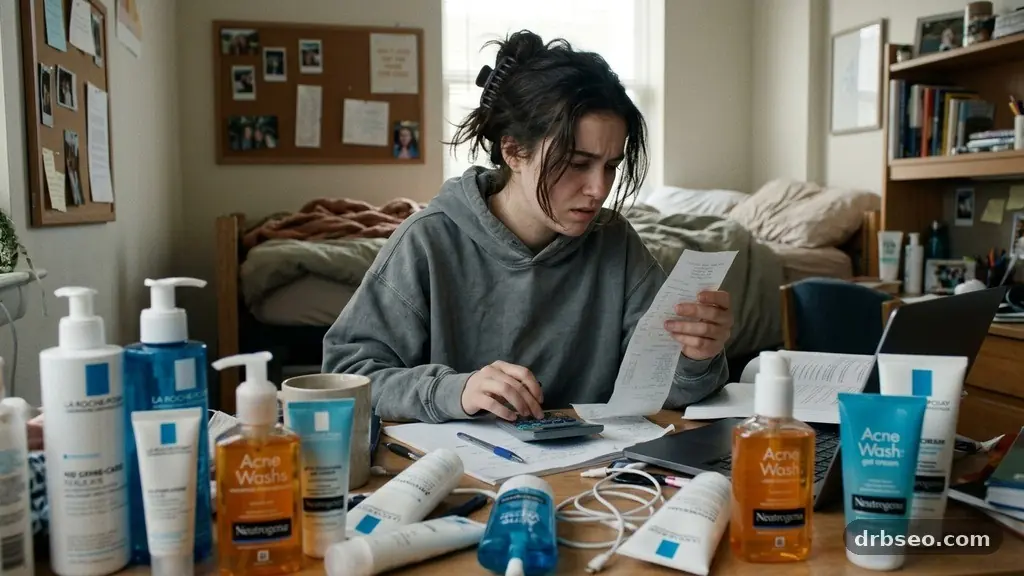
For a college student asking, “I Am a College Student. Are La Roche-Posay Products Better for Acne-Prone Skin Than Neutrogena?”, the honest answer is that neither brand wins for everyone. La Roche-Posay often appeals to people who want gentle, fragrance-conscious formulas and a carefully built routine, while Neutrogena offers more widely available acne treatments at a range of prices.
The better choice depends on your acne type, sensitivity, budget, and the active ingredient in the specific product. Comparing labels rather than logos can help you avoid wasted money, irritated skin, and an overcomplicated dorm-room routine.
Which Brand Is Better for Acne?
La Roche-Posay isn’t automatically better than Neutrogena for acne-prone skin. La Roche-Posay Effaclar products may be a stronger fit for students who have sensitive or easily irritated skin and prefer a minimalist routine, while Neutrogena may be the better value for someone seeking a straightforward salicylic acid or benzoyl peroxide treatment.
The active ingredient matters more than the brand name. Salicylic acid can help loosen dead skin cells inside clogged pores, benzoyl peroxide targets acne-causing bacteria and inflammation, and adapalene helps regulate the formation of new breakouts over time.
There is also a practical difference between treating a pimple and managing the conditions that produce repeated breakouts. A cleanser may remove oil and sunscreen at the end of a long day, but a leave-on treatment often has a more direct role in controlling acne.
For a college student, the best routine is usually the one that can be purchased consistently, used correctly, and tolerated for several weeks. A premium-feeling product that stays in a drawer is less useful than an affordable formula used steadily.
| Decision factor | La Roche-Posay | Neutrogena |
|---|---|---|
| Typical appeal | Gentle-feeling, pharmacy-style skincare with options for sensitive skin | Accessible acne care with many budget-friendly choices |
| Common acne ingredients | Salicylic acid and other treatment-focused formulas, depending on the product | Salicylic acid, benzoyl peroxide, and adapalene options, depending on the product |
| Best match | Students prioritizing comfort, texture, and a restrained routine | Students prioritizing availability, price, and familiar acne actives |
| Main caution | A higher price does not guarantee better acne control | Some treatment formulas may feel drying or irritating if overused |
What La Roche-Posay Effaclar Offers
La Roche-Posay Effaclar is the brand’s acne-focused range, and it is designed around concerns such as excess oil, clogged pores, blemishes, and post-breakout sensitivity. The line includes cleansers, targeted treatments, moisturizers, and sunscreens, so a student can build a routine without mixing many unrelated brands.
One reason students gravitate toward Effaclar is the sensory experience. Some formulas are made to feel lighter, less greasy, or more comfortable under sunscreen, which matters if you’re rushing from a morning class to work or wearing makeup during a presentation.
That comfort can help with consistency, but it shouldn’t be mistaken for proof of superior acne treatment. A La Roche-Posay cleanser containing salicylic acid may be useful for oily skin and clogged pores, yet the product still needs to be used often enough and gently enough to avoid excessive dryness.
Products marketed for blemish-prone skin may also include ingredients intended to support the skin barrier. That is valuable for students who have combined acne treatment with harsh scrubs, alcohol-heavy products, or frequent picking and are now dealing with stinging and peeling.
Some Effaclar products may be better suited to people who want a pharmacy brand with a dermatology-oriented identity. Still, “dermatologist-tested” is not the same as “guaranteed to clear acne,” and it does not remove the need to check the full ingredient list.
Where the range can fall short
A broad product family can tempt shoppers into buying too much. Using an exfoliating cleanser, a leave-on acid, a drying spot treatment, and a strong retinoid at the same time can damage the skin barrier even if each item seems reasonable on its own.
Price is another limitation. If a student can afford only one treatment product, spending extra on a cleanser may leave less money for an effective leave-on active, a basic moisturizer, or sunscreen for acne-prone skin.
Read More: Jamie Afifi: What Really Happened Between Him and Sarah Chalke?
What Neutrogena Acne Products Do Well
Neutrogena has a major advantage in access. Its products are commonly sold in drugstores, supermarkets, department stores, and online retailers, which is useful when a student runs out during midterms or needs a replacement without waiting for a delivery.
The brand also offers several familiar acne ingredients. Depending on the product, Neutrogena acne products may use salicylic acid for clogged pores, benzoyl peroxide for inflammatory acne, or adapalene for recurring breakouts.
That variety allows a student to match the treatment to the pattern of acne rather than choosing solely by packaging. Small blackheads across the nose and forehead call for a different strategy from tender red pimples along the jaw or cheeks.
Neutrogena’s lower-cost options can make experimentation less financially stressful. A student may be able to buy a simple cleanser, an oil-free moisturizer, and one treatment without turning skincare into a major monthly expense.
The trade-off is that some acne formulas can be drying, particularly when used too frequently or layered with other active ingredients. A product that works well for oily teenage skin might feel uncomfortable on skin that is already irritated by cold weather, shaving, stress, or prescription treatment.
How to read the product, not the label
Look for the active ingredient and its concentration when it is listed, then check the directions. “Acne wash” can refer to a mild cleanser, while “acne treatment” may be a leave-on formula that requires a slower introduction.
Also examine the rest of the formula. Fragrance, exfoliating acids, and a strong cleansing base aren’t automatically bad, but a student with sensitive skin may tolerate a simpler product better than a powerful combination formula.
Active Ingredients Matter More Than Branding
Acne treatment works through different pathways, and choosing the wrong pathway can create frustration. Salicylic acid is oil-soluble, so it can move into pores and help remove the mixture of oil and dead cells that contributes to congestion.
Benzoyl peroxide is often used for red, inflamed pimples because it helps reduce acne-related bacteria on the skin. It can bleach towels, pillowcases, and clothing, so a dorm-room routine should include white or easily replaceable fabrics.
Adapalene is a topical retinoid used to help prevent new comedones and breakouts. It often causes dryness or an adjustment period at first, and results are not usually judged after only a few nights.
These ingredients can be effective, but stronger is not always better. Applying a thick layer or using multiple treatments every day may cause burning and peeling, which makes it harder to continue treatment and can leave the face looking more inflamed.
- For clogged pores: consider a gentle salicylic acid product and avoid abrasive scrubs that create friction.
- For red pimples: benzoyl peroxide may be useful, but introduce it carefully and protect fabrics from bleaching.
- For recurring comedones: adapalene may help over time, provided the directions are followed and irritation is managed.
- For sensitive skin: start with one active ingredient rather than combining several at once.
- For dry or tight skin: add a plain moisturizer before escalating treatment strength.
Patch testing can reduce the chance of a dramatic reaction, although it cannot predict every acne outcome. Apply a small amount to a limited area according to the product’s directions, and stop if you develop severe swelling, blistering, or intense burning.
Building a College Student Skincare Routine
A college student skincare routine should survive real conditions: late nights, shared bathrooms, changing weather, sweat from walking across campus, and limited time before an early lecture. Four or five products are not automatically better than three.
In the morning, a gentle cleanser or a water rinse may be enough, followed by an oil-free moisturizer and sunscreen for acne-prone skin. Sunscreen is especially important when using ingredients that can increase irritation or when dark marks remain after pimples heal.
At night, remove sunscreen and makeup thoroughly without scrubbing. Follow with one acne treatment, then moisturizer if the skin feels dry or tight.
A simple routine might look like this:
- Cleanse gently in the evening and after heavy sweating.
- Use one acne active according to its label instructions.
- Apply moisturizer to reduce dryness and support the skin barrier.
- Wear broad-spectrum sunscreen during the day.
- Change or wash pillowcases regularly, especially if hair products transfer onto them.
Students often blame food, stress, or laundry for every breakout, but acne usually has multiple contributors. Sleep disruption, hormonal changes, occlusive makeup, sweat, and inconsistent treatment can all affect the pattern, while no single cleanser can control every factor.
Keep the routine stable for several weeks unless there is a clear reaction. Changing products every few days makes it impossible to tell whether a treatment is helping, irritating the skin, or simply not receiving enough time to work.
Choosing for Sensitive or Irritated Skin
Sensitive skin needs a different decision process from naturally oily skin. If a face feels hot, raw, tight, or painful after cleansing, the immediate priority may be restoring comfort rather than adding another exfoliant.
La Roche-Posay is often chosen in this situation because many shoppers associate the brand with gentle, barrier-conscious skincare. That reputation can be helpful, but the specific formula still matters more than the logo.
Neutrogena also sells gentle cleansers, moisturizers, and sunscreen products that may work well for sensitive skin. A fragrance-free, non-comedogenic moisturizer from either brand may be more useful than an aggressive acne treatment when the face is peeling.
Moisturizer does not cause acne simply because it feels hydrating. A suitable oil-free moisturizer can reduce flaking, improve comfort, and help a student use an acne treatment consistently instead of abandoning it after a week.
Signs that the routine is too harsh
Persistent stinging, cracking around the nose, sudden rough patches, and redness that lasts after washing suggest that the skin barrier may be struggling. Peeling alone can occur with some treatments, but painful peeling is a reason to reduce frequency and seek professional advice if it continues.
Do not use a gritty scrub to remove flakes. It can create more friction and leave irritated areas vulnerable to additional inflammation.
For a short reset, many people simplify to a gentle cleanser, moisturizer, and sunscreen. Once the skin feels calmer, one acne active can be reintroduced gradually rather than restarting every product at full frequency.
Price, Availability, and Dorm-Room Practicality
Budget is not a minor detail for college students. Tuition, textbooks, transportation, food, and housing can make a modest price difference meaningful, especially when acne care requires repeat purchases rather than a single bottle.
Neutrogena often has an advantage in availability and promotional pricing. A student can compare sizes, use a store coupon, or buy a replacement during a regular grocery trip.
La Roche-Posay may offer textures or packaging that a particular student prefers, but the extra cost should be justified by a real benefit such as better tolerance, easier daily use, or a formula that does not leave the face uncomfortable.
| Student situation | Practical priority | Reasonable choice |
|---|---|---|
| Limited budget | One proven active plus basic moisturizer | Whichever brand offers the needed ingredient at a sustainable price |
| Shared bathroom | Simple packaging and a short routine | A cleanser, treatment, moisturizer, and sunscreen used consistently |
| Frequent travel home | Easy replacement and dependable availability | Often Neutrogena or another widely stocked drugstore option |
| Reactive skin | Low irritation and barrier support | The gentler formula, regardless of brand name |
Travel size can be convenient, but transferring skincare into unlabelled containers creates confusion and may affect product stability. Keep active treatments in their original packaging when possible, especially if roommates or family members might accidentally use them.
Storage matters too. Extreme heat in a car or a sunny windowsill can affect some products, while a cool, dry drawer is usually more sensible than a steamy shower shelf.
Common Mistakes That Make Acne Worse
Overwashing is one of the most common problems. Washing more often does not remove the underlying tendency toward acne, and repeated stripping can leave the skin dry, irritated, and more difficult to treat.
Another mistake is using several strong ingredients because each one seems to target a different concern. A salicylic acid cleanser, benzoyl peroxide leave-on treatment, adapalene, and exfoliating toner may be too much for one routine, particularly during the first few weeks.
Picking creates a separate problem. Squeezing a pimple can push inflammation deeper and increase the chance of a lingering dark mark or scar, even when the original blemish would have settled on its own.
Skipping moisturizer is also counterproductive for many students. Dryness can encourage treatment abandonment, and a compromised skin barrier may make ordinary products sting.
Finally, don’t judge a product only by whether it produces a dramatic immediate sensation. Cooling, tingling, and tightness are not reliable measures of effectiveness.
When a routine needs professional help
Deep, painful nodules, widespread inflammatory acne, scarring, or acne that affects confidence deserve medical attention. A dermatologist can distinguish acne from conditions such as folliculitis or perioral dermatitis and recommend treatments that over-the-counter products cannot provide.
Seek advice sooner if breakouts are leaving scars or if several months of careful, consistent treatment have produced little improvement. Students can check whether their campus health center offers dermatology referrals or lower-cost consultations.
The American Academy of Dermatology’s acne skin-care recommendations also provide useful guidance on gentle cleansing, avoiding picking, and choosing non-comedogenic products.
How to Compare Two Products Fairly
Compare products by function, not by brand reputation. Place the two ingredient lists side by side and ask whether they are cleansers, leave-on treatments, moisturizers, or sunscreens before judging which is “stronger.”
Next, identify the active ingredient. A Neutrogena adapalene product and a La Roche-Posay salicylic acid cleanser are not direct substitutes, so saying one brand is better would ignore the different jobs those products perform.
Texture and tolerance deserve a place in the comparison. If one sunscreen pills under makeup while another sits comfortably on the skin, the more wearable product may be the better choice even if both offer appropriate protection.
Check directions carefully. Some products are intended for daily use, while others should begin every other day or for a limited contact time, particularly if they contain exfoliating or potentially irritating ingredients.
Give the choice a fair trial unless irritation appears. Acne treatment often requires patience, and improvement may show up first as fewer new blemishes rather than perfectly clear skin.
A sensible trial method
Start with a basic cleanser, moisturizer, and sunscreen, then introduce one acne treatment. Keep notes for a few weeks about redness, dryness, new breakouts, and whether the product fits your schedule.
If the skin remains comfortable but acne is unchanged, the treatment may not match the acne type, the usage may be inconsistent, or professional treatment may be appropriate. If the skin becomes painful, scale back rather than assuming irritation means the product is working.
Frequently Asked Questions
Is La Roche-Posay Effaclar better than Neutrogena for oily skin?
Not necessarily. Both brands offer products aimed at oily and acne-prone skin, but the best option depends on the exact active ingredient, cleansing strength, texture, and how your skin responds. A gentle formula that controls oil without leaving tightness is usually more useful than the most aggressive option.
Can I use La Roche-Posay and Neutrogena in the same routine?
Yes, brand loyalty isn’t required. You might use a cleanser from one brand, an acne treatment from another, and a moisturizer from a third, but introduce products separately so you can identify irritation and avoid stacking too many active ingredients.
Which is better for sensitive skin?
Neither brand is universally best for sensitive skin. Look for a simple, non-comedogenic formula that your skin tolerates, and be cautious with fragrance, harsh scrubbing, and multiple exfoliants. A moisturizer that supports the skin barrier can make acne treatment easier to continue.
Should a college student start with salicylic acid or benzoyl peroxide?
Salicylic acid may be a logical starting point for mainly clogged pores and blackheads, while benzoyl peroxide may be more relevant to red, inflamed pimples. The right choice also depends on dryness, sensitivity, and whether you are already using another active ingredient.
When should I see a dermatologist?
Arrange professional care for painful deep acne, scarring, widespread inflammation, or breakouts that do not improve after consistent over-the-counter treatment. A dermatologist can create a plan that may include prescription retinoids, antibiotics, hormonal treatment, or other options when appropriate.
Final Takeaway
For someone asking, “I Am a College Student. Are La Roche-Posay Products Better for Acne-Prone Skin Than Neutrogena?”, the practical verdict is no universal winner. La Roche-Posay may offer the comfort and sensitive-skin focus you prefer, while Neutrogena may deliver the active ingredient, availability, and price that fit student life better.
Choose one treatment based on your acne pattern, add a moisturizer and sunscreen, and give the routine time unless irritation develops. Start small, read the label, and consider sharing your experience or questions with a healthcare professional who can help tailor the next step.
2 thoughts on “I Am a College Student. Are La Roche-Posay Products Better for Acne-Prone Skin Than Neutrogena?”