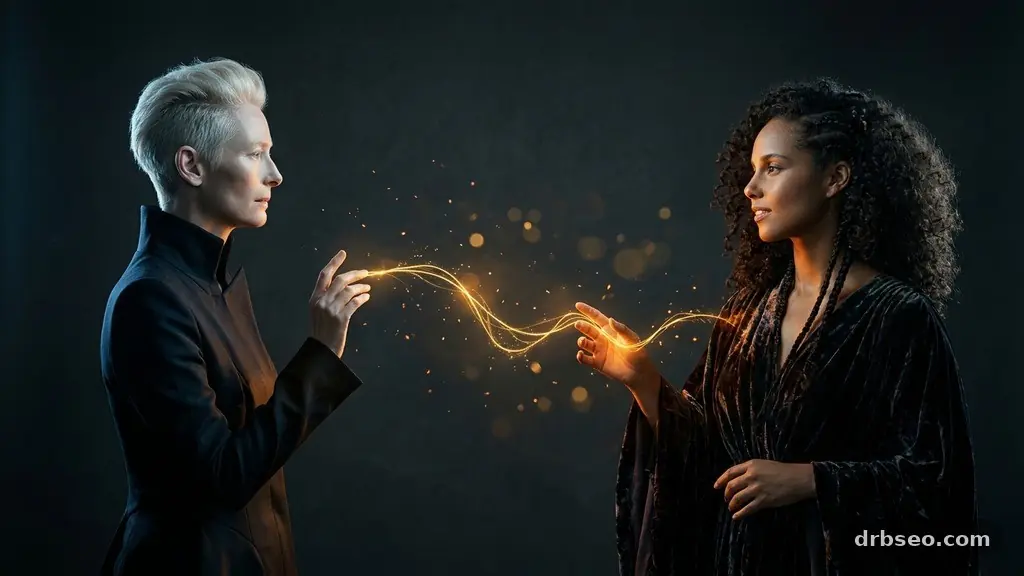
Tilda Swinton and Alicia Keys come from different creative worlds, yet their careers meet in a striking place: both have built public identities around artistic freedom rather than conventional celebrity formulas. Swinton reshaped expectations of film acting, while Keys brought classical musicianship, soul, and a more natural approach to beauty into mainstream pop. Their connection is not a secret collaboration or family link.
It is a shared refusal to let fame dictate how they should look, work, speak, or grow. Their stories offer a useful way to understand creative independence, social activism, fashion, and the changing rules of celebrity culture.
The connection in plain terms
The strongest link between Tilda Swinton and Alicia Keys is creative independence. Swinton has repeatedly chosen unusual films, challenging roles, and visually distinctive collaborations instead of staying inside a predictable Hollywood image. Keys has done something similar in music, moving between piano-led soul, pop, R&B, Broadway, television, and advocacy without reducing herself to one commercial identity.
Both women also challenge narrow ideas of public femininity. Swinton has played characters across different ages, identities, moral positions, and even forms of gender presentation, while Keys made a public decision to appear without conventional makeup during a major period of her career.
Neither approach means that appearance is irrelevant. Rather, each has questioned the idea that a woman in the spotlight must present one polished, easily marketable version of herself.
There is no reliable public evidence that they share a major business venture, a musical recording, or a film project. Their connection is cultural and creative: unconventional beauty, artistic reinvention, cross-disciplinary work, and a willingness to set personal terms all sit at the centre of their public careers.
Two careers built on reinvention
Swinton’s career began in theatre and experimental film rather than conventional movie-star packaging. Her work with director Derek Jarman, including films such as Caravaggio, Edward II, and Orlando, established her as an actor drawn to formally daring material. Those early choices mattered because they gave her a reputation based on risk and range before major studio productions made her widely recognisable.
Her later filmography shows how deliberately she has moved between categories. She won the Academy Award for Best Supporting Actress for Michael Clayton in 2008, then appeared in projects as different as We Need to Talk About Kevin, Snowpiercer, Only Lovers Left Alive, Doctor Strange, and Suspiria. A useful reference point is the Academy’s record of the 2008 Oscars, which confirms the award rather than relying on entertainment summaries.
Keys also refused to remain in one lane. Her debut album, Songs in A Minor, arrived in 2001 and introduced a performer whose piano playing and songwriting were central to her sound. She became a major recording artist, but she also explored acting, Broadway, television production, memoir writing, beauty, and philanthropy.
That range is important. Reinvention does not simply mean changing a hairstyle or accepting a different role; it can mean adding new forms of authorship. Swinton often does this through the directors and projects she chooses, while Keys often does it by expanding her role from singer to songwriter, producer, performer, host, entrepreneur, and advocate.
Read More: John Fisher and Oprah Winfrey: Is There a Documented Connection?
Different art forms, similar creative instincts
Acting and music ask for different kinds of discipline, but both careers depend on interpretation. Swinton disappears into the emotional and physical logic of a character, sometimes using prosthetics, accents, extreme styling, or an altered movement pattern. Keys works through voice, rhythm, piano, lyrics, and the atmosphere of live performance.
The similarity is not that they produce the same kind of art. It is that both treat technique as a means of expression rather than as a rigid identity.
Swinton can appear icy, comic, frightening, tender, or almost otherworldly from one film to the next. Keys can move from intimate piano ballads to powerful anthems without abandoning the musical training that anchors her.
Both also understand the value of collaboration. Swinton’s most memorable work often comes from strong partnerships with filmmakers such as Jarman, Jim Jarmusch, Wes Anderson, Bong Joon-ho, and Luca Guadagnino. Keys has worked with producers, rappers, singers, orchestras, Broadway teams, and visual artists, while still maintaining a recognisable musical voice.
That balance between collaboration and authorship helps explain their longevity. A performer who insists on doing everything alone can become limited, but a performer who surrenders every decision to a team can become interchangeable. Swinton and Keys occupy a more interesting middle ground: they collaborate widely, yet their choices still feel connected to a personal point of view.
Beauty, visibility, and self-definition
Unconventional beauty is one of the clearest points of connection between them. Swinton’s pale complexion, angular features, close-cropped hairstyles, and striking physical presence have often been treated by fashion and film media as signs of an almost alien elegance. Her appearance has never fitted neatly into the standard image of a leading woman, and she has used that difference rather than hiding it.
Keys confronted a different but related pressure. In 2016, she spoke publicly about wanting to stop relying on makeup and appeared with a visibly more natural face at public events and in promotional settings. The decision became widely discussed because it challenged the entertainment industry’s expectation that a female star should always appear camera-ready through layers of cosmetic preparation.
Neither woman argues that makeup or glamour is wrong. Swinton has worn elaborate fashion and theatrical makeup, and Keys has also appeared in highly styled looks. The shared point is choice: beauty should be a creative option, not a compulsory performance of acceptability.
This distinction matters in celebrity culture, where a personal decision can quickly become a marketing story. Keys’s no-makeup period was often reduced to a slogan, while Swinton’s appearance is sometimes turned into a fashion label. Their actual careers are more nuanced than those headlines suggest because both have moved between natural presentation, artifice, luxury clothing, and dramatic transformation.
Fashion as part of the artistic language
Fashion is not a side note in either woman’s public identity. Swinton has developed a long association with designers and image-makers who value sculptural silhouettes, unusual proportions, and a slightly otherworldly mood. Her red carpet appearances can look less like standard promotional dressing and more like an extension of the films she chooses.
Her style has also helped broaden discussion around gender-fluid presentation. Tailoring, minimalism, sharp suiting, and deliberately ambiguous shapes often appear in her wardrobe, but she can also wear highly feminine gowns or romantic designs. The point is not that she follows one style rule; it is that she treats clothes as a tool for shifting perception.
Keys uses fashion differently, often combining New York City practicality with glamour, streetwear, strong tailoring, and dramatic evening pieces. Her clothes may support the mood of an album, a performance, a public appearance, or a larger message about confidence. She can appear polished without seeming detached from the urban musical culture that shaped her.
Their relationship with fashion shows why image can be more than decoration. Clothing helps performers communicate before they speak, particularly at film premieres, award ceremonies, concerts, and the Met Gala. For both women, style has been a way to resist a single fixed image while remaining recognisable.
- Swinton’s visual language: sculptural clothing, experimental silhouettes, and a willingness to blur familiar gender codes.
- Keys’s visual language: natural beauty, New York energy, bold tailoring, and a flexible mix of street and formal style.
- The shared idea: public appearance can express authorship instead of merely satisfying a beauty standard.
Read More: Cenelia Pinedo Blanco: The Woman Behind Randy Arozarena
Public life beyond performance
Their influence extends beyond acting and music because both have used visibility to discuss issues larger than promotion. Keys has been especially direct through her social activism, including work connected to HIV and AIDS awareness. She co-founded Keep a Child Alive in 2003, an organisation associated with support for children and families affected by HIV and AIDS in Africa and India.
That work gives her public image a practical dimension. A benefit performance or awareness campaign can turn celebrity attention into fundraising, public education, and political pressure, although advocacy always requires more than a famous face. Keys’s long involvement in this area has made philanthropy a continuing part of her career rather than a single publicity moment.
Swinton’s activism has often appeared through her cultural choices and public support for artistic, political, and human-rights causes. Her association with independent cinema, queer filmmaking, and directors willing to challenge social assumptions has given her a different kind of public influence. She has also spoken in ways that resist the idea that actors must remain politically neutral at all times.
The two approaches are not identical. Keys has attached her name to a defined charitable organisation and sustained advocacy work, while Swinton’s impact is more dispersed through film, public statements, and support for unconventional creative communities. Still, both demonstrate that celebrity can be used to widen a conversation rather than simply sell a product.
Why their identities feel larger than one profession
Swinton and Keys are often described by their primary occupations, but neither fits comfortably inside a single job title. Swinton is an actor, producer, fashion figure, festival presence, and collaborator on projects that cross film, performance, and visual art. Keys is a musician, songwriter, actor, author, producer, entrepreneur, and philanthropist.
This breadth can be mistaken for a modern branding strategy, yet both women developed it through specific work. Swinton’s movement from avant-garde cinema to major franchise films did not erase her earlier interests. Keys’s move from albums to Broadway, television, and social causes did not make her musical background less important.
Their careers also show two different routes to authority. Swinton’s authority comes partly from selectivity and artistic unpredictability; audiences expect her to make an unusual choice. Keys’s authority comes partly from musicianship and emotional accessibility; audiences can identify the piano, voice, and songwriting values that have remained present across different phases.
That contrast makes the comparison more useful than a simple claim that they are “similar.” They represent different models of independence. Swinton protects freedom by keeping her work difficult to categorise, while Keys protects freedom by building a broad platform from which music, advocacy, business, and personal expression can reinforce one another.
What their careers reveal about celebrity culture
Celebrity culture often rewards immediate recognition. A star is expected to have a clear look, a repeatable story, and a product that can be explained in one sentence. Swinton and Keys have benefited from fame, but they have also resisted the narrowing effects that fame can bring.
Swinton’s career suggests that mainstream recognition does not have to end experimentation. After receiving an Oscar and appearing in large-scale productions, she continued to work with directors whose films were strange, demanding, or commercially uncertain. Her presence in a blockbuster did not require her to abandon independent cinema.
Keys’s career shows that pop success does not have to eliminate personal values. She has released commercially visible music while continuing to foreground piano playing, songwriting, and social causes. Even her public discussion of makeup became meaningful because it addressed the pressure placed on women whose faces are constantly photographed.
Both also demonstrate the power and danger of media narratives. A headline may call Swinton “otherworldly” or describe Keys as “natural,” but those labels can flatten complicated people. Their real work is more revealing than the adjectives: the films, songs, performances, clothing choices, interviews, and causes form a record of ongoing self-definition.
Key similarities and important differences
A comparison works best when it includes distinctions. Tilda Swinton and Alicia Keys are connected by values and methods, not by identical biographies, industries, or public strategies. Their differences are what make the shared themes easier to see.
| Area | Tilda Swinton | Alicia Keys |
|---|---|---|
| Primary field | Film acting and performance | Music, songwriting, and live performance |
| Early creative path | Experimental theatre and independent cinema, including collaborations with Derek Jarman | Piano-based songwriting, classical training, and the 2001 debut album Songs in A Minor |
| Major public recognition | Academy Award for Best Supporting Actress for Michael Clayton | Multiple Grammy Awards and major international success as a recording artist |
| Image and style | Androgynous tailoring, sculptural fashion, and transformative film roles | Natural beauty, expressive glamour, New York-influenced styling, and piano-centred musicianship |
| Public advocacy | Support expressed through cultural work, independent film, and socially challenging projects | Long-running HIV and AIDS advocacy linked to Keep a Child Alive |
| Shared quality | A willingness to grow publicly without accepting one permanent definition of success | |
The table shows why the comparison should not be presented as a claim that the women have had the same experience. Swinton’s route has been actor-led and cinema-centred, while Keys’s has been built around music, performance, and a more direct relationship with a global fan base.
The overlap lies in their decisions. Both have taken control of how their image develops, chosen work that reflects more than commercial convenience, and used public attention to create room for broader conversations about identity, beauty, and responsibility.
Why the comparison still matters
Pairing these two figures may seem surprising at first, and that surprise is useful. It encourages a wider definition of artistic achievement, one that includes not only awards or sales but also the ability to remain curious and self-directed over time.
For younger performers, their careers offer two practical lessons. First, a successful beginning does not have to become a permanent template; Keys could grow beyond her debut-era sound, and Swinton could move between experimental films and studio productions. Second, personal style is stronger when it grows from genuine choices rather than from a temporary attempt to imitate a trend.
The comparison also speaks to audiences. Viewers and listeners often ask public figures to be consistent, but consistency can mean commitment to values rather than repetition of appearance. Swinton remains committed to risk, and Keys remains committed to music, expression, and social connection, even as the outward forms change.
That is why their stories feel uplifting without pretending that fame is easy. Each woman has faced scrutiny, expectation, and commercial pressure, yet neither has allowed public attention to become the only author of her identity. Their careers suggest that independence is not a single dramatic refusal; it is a series of choices made over decades.
Frequently asked questions
Are Tilda Swinton and Alicia Keys related?
No publicly established family relationship connects Tilda Swinton and Alicia Keys. They come from different backgrounds and work primarily in different fields, so the comparison concerns their artistic values, public images, and approaches to reinvention rather than their ancestry.
Have Tilda Swinton and Alicia Keys worked together?
There is no widely documented major film, album, or stage project jointly led by them. They may appear within the same broad celebrity and fashion ecosystem, but their notable professional collaborations have generally involved different partners.
What is the biggest similarity between them?
The clearest similarity is their commitment to self-definition. Swinton has chosen unconventional film roles and gender-fluid style, while Keys has combined music with advocacy and questioned strict expectations around makeup and female presentation.
How are their careers different?
Swinton is primarily known for acting in independent, art-house, and major studio films. Keys is primarily a singer, songwriter, pianist, and recording artist, although she has also worked in acting, theatre, publishing, business, and philanthropy.
Why are they important in discussions of beauty and style?
Both have shown that women in public life don’t need one fixed visual identity. Swinton has made unconventional and androgynous presentation part of her creative vocabulary, while Keys has made natural beauty and flexible styling visible within mainstream music culture.
What connects them most
Tilda Swinton and Alicia Keys are connected by more than an unusual comparison. They have each treated fame as a platform for artistic growth, personal choice, and wider conversation, while resisting the pressure to repeat a single version of themselves forever.
The most useful next step is to look beyond the headlines: watch a Swinton film chosen for its director, listen to a Keys record for its musicianship, and notice how fashion, advocacy, and performance shape both careers. Their paths are different, but together they show how creative independence can make a public life feel more honest, expansive, and human.