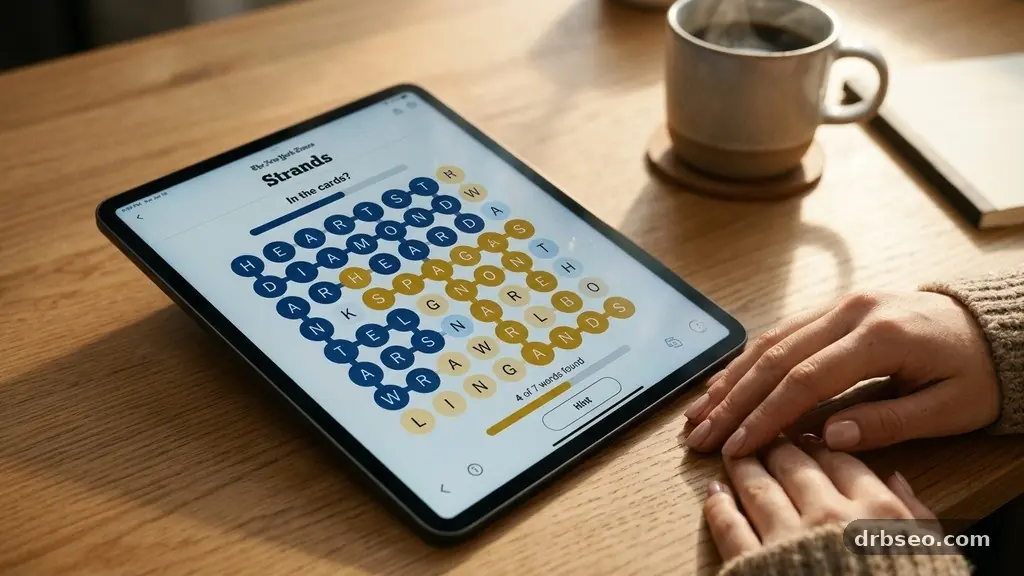
NYT Strands today can mean different puzzles depending on the year, since November 16 returns every year. For the archived November 16, 2024 Strands puzzle, the theme was “A cut above”, with a set of words connected to cutting tools and sharp-edged objects. The Spangram was CUTTINGTOOLS.
The answer list, solving logic, and spoiler-light hints below are aimed at that 2024 edition. If you mean a different year, check the date shown in the New York Times Games interface before using the answers, because the letter grid and theme words change completely from one annual date to the next.
November 16 Strands answer at a glance
The November 16 Strands puzzle used a practical, object-based theme rather than a category built around names, places, or phrases. The clue “A cut above” points toward items that slice, trim, chop, or shear, and that wording is the main route into the grid.
The central answer, or Spangram, is CUTTINGTOOLS. In the Strands format, the Spangram uses every letter of the theme in a continuous path across the board, although it does not have to be a straight line.
| Clue element | Answer | What it tells you |
|---|---|---|
| Theme clue | A cut above | Look for objects used to cut, slice, trim, or chop. |
| Spangram | CUTTINGTOOLS | The umbrella phrase connecting the theme words. |
| Puzzle date | November 16, 2024 | The date identified in this answer breakdown. |
| Game | NYT Strands | A daily word search puzzle from New York Times Games. |
The answer words are built around familiar cutting implements, including KNIFE, RAZOR, SCISSORS, SHEARS, CLEAVER, HATCHET, and SWORD. Exact word placement matters because Strands accepts words through adjacent letters, not through ordinary horizontal and vertical lines alone.
If you want to preserve some of the challenge, stop after the theme and Spangram. Those two facts often give enough direction to uncover the remaining entries without revealing every path through the letter grid.
Hints before seeing the full answers
A good Strands hint should narrow the field without turning the puzzle into a transcription exercise. For this edition, think about things found in a kitchen, a barber’s kit, a workshop, a garden shed, or a historical weapon collection.
- Hint one: One answer is a common utensil used for slicing food.
- Hint two: One answer is associated with shaving rather than cooking.
- Hint three: A pair of blades used for cutting fabric or hair appears in the grid.
- Hint four: Look for a heavier tool used to divide or chop material.
- Hint five: The longest-looking thematic idea is the Spangram, CUTTINGTOOLS.
These prompts are deliberately broad because the theme covers several settings. A kitchen clue may lead you toward KNIFE or CLEAVER, while a grooming clue points toward RAZOR or SCISSORS.
One useful tactic is to search for a short answer first. A four- or five-letter word can reveal the direction of a nearby path, even if it does not immediately expose the Spangram. Once a few letters disappear from the grid, longer answers become easier to trace.
Full theme words and the Spangram
For readers who want the complete puzzle solution, the theme words associated with this November 16 edition are KNIFE, RAZOR, SCISSORS, SHEARS, CLEAVER, HATCHET, and SWORD. Together, they fit the broad idea represented by the Spangram, CUTTINGTOOLS.
| Theme word | Typical association | Why it fits |
|---|---|---|
| KNIFE | Kitchen or general-purpose cutting | A familiar blade used to slice and separate material. |
| RAZOR | Shaving and grooming | Designed for making a very close cut. |
| SCISSORS | Fabric, paper, hair, and crafts | Two blades work together around a pivot. |
| SHEARS | Gardening, tailoring, or heavy cutting | A larger or specialised cutting instrument. |
| CLEAVER | Food preparation | A broad, heavy blade made for chopping. |
| HATCHET | Woodcutting and outdoor work | A compact axe used to chop or split. |
| SWORD | Historical weaponry | A long blade with a cutting edge. |
The Spangram is especially useful here because it states the category in plain language. It is not another individual object; it is the phrase that links the individual answers.
Some players expect every theme word to belong to one narrow profession or location. This puzzle is looser. Its entries share a function, so the grid rewards thinking about what an object does rather than where it is normally found.
How the letter grid leads to the solution
NYT Strands is not a standard word search puzzle. The letters can connect in multiple directions, and a single answer may bend around corners or travel across a large portion of the board.
That flexibility is important for the November 16 puzzle because words such as SCISSORS and CLEAVER contain distinctive letter combinations, while shorter entries like KNIFE can hide among ordinary-looking letters. The visual shape of a word matters as much as its spelling.
Start by scanning for uncommon letters. A V may suggest CLEAVER, while a Z makes RAZOR easier to spot. The letters in SWORD and SHEARS can also stand out when you examine diagonals instead of only reading across the rows.
After finding a possible theme word, trace the route carefully before submitting it. Strands requires each letter to touch the next one, including diagonal contact, but it does not permit a jump over an unused square.
The Spangram can be harder to place because CUTTINGTOOLS contains repeated and common letters. Look for fragments such as CUT, TOOL, or ING, then test whether the full phrase can continue through adjacent squares.
Finding the Spangram early does not automatically solve the board. It identifies the category, but the remaining letters still need to be sorted into the individual theme words and any non-theme words that may trigger hints.
Why the “A cut above” theme works
The theme clue uses an everyday idiom with a literal twist. “A cut above” normally describes something superior, but in this puzzle the word “cut” points directly toward blades, shears, and other implements that remove or divide material.
That double meaning is common in NYT Strands. The theme clue rarely gives a dictionary definition of the answers. Instead, it may use a pun, an expression, or a suggestive phrase that becomes clearer after one or two words are found.
Here, the clue also helps separate the intended answers from tempting alternatives. Words such as SLICE, CHOP, or TRIM relate to cutting, but they describe actions rather than the tools represented by the theme words.
The distinction explains why the Spangram is so valuable. CUTTINGTOOLS tells you that the board is looking for nouns representing implements, not merely verbs associated with the activity.
It also gives the puzzle a pleasant range of contexts. KNIFE and CLEAVER suggest cooking, RAZOR brings in grooming, SHEARS can suggest gardening or tailoring, and HATCHET and SWORD extend the category into outdoor work and historical weaponry.
What to do when a word is not accepted
Strands may reject a perfectly valid word because it is not part of the day’s theme. That does not mean the spelling is wrong or that the game has malfunctioned.
For example, a grid centred on cutting tools may contain letter paths that form words such as CUT, BLADE, or SLICE. Those can be legitimate English words without being designated theme words for the puzzle.
When an ordinary word is not accepted as a theme answer, keep it in mind as a possible hint generator. In Strands, finding three non-theme words typically earns a hint, which reveals the letters of one theme word in the grid.
The hint does not always draw the complete route for you. It usually identifies the letters belonging to an answer, after which you still need to connect them in the correct order. That preserves a small part of the solving process.
It helps to avoid random tapping. Instead, record likely non-theme words mentally and use them deliberately when you need assistance.
Common mistakes on this puzzle
One mistake is treating every blade-related word as interchangeable. A KNIFE, CLEAVER, RAZOR, and HATCHET all cut, but their lengths and letter patterns differ, so guessing based only on meaning can send you toward an impossible route.
Another mistake is searching only in straight lines. The November 16 grid depends on the game’s eight-direction movement, so inspect bends, corners, and diagonal connections as carefully as rows and columns.
A third mistake is spending too long on the Spangram. It is a powerful category clue, but if its path seems hidden, solve a short theme word first and return to it with more of the board exposed.
A practical solving method for future Strands games
The same process works well beyond this particular date. Begin with the theme clue and write down two or three possible interpretations before touching the grid.
- Read the clue literally and figuratively. A phrase may describe the answers directly or hide a pun.
- Search for unusual letters. Rare letters and distinctive clusters often reveal longer theme words.
- Test short words. A compact answer can open a section of the grid and expose nearby letters.
- Look for the Spangram. It usually expresses the shared category and may stretch across the board.
- Use non-theme words strategically. Three valid off-theme words can produce a hint.
- Check the category after every find. Ask whether the word fits the same grammatical and thematic pattern.
The order does not need to be rigid. Some players identify the Spangram first, while others prefer to collect several small words and let the theme emerge gradually.
For the November 16 puzzle, a category-first approach is particularly effective because the answers come from different everyday settings. Once you recognise that the entries are tools rather than actions, the grid becomes less ambiguous.
Patience matters more than speed. Strands is designed so that an apparently empty corner can become obvious after one nearby answer is removed.
How Strands differs from other New York Times Games
Strands shares the daily rhythm of the New York Times Games collection, but its solving experience sits somewhere between a crossword and a visual word search. The player receives a theme clue instead of a numbered clue list and must discover which words belong on the board.
Unlike a conventional word search puzzle, the answers are not necessarily placed in straight horizontal, vertical, or diagonal lines. Their paths can turn, and the Spangram often creates a route that crosses much of the letter grid.
Unlike Wordle, the game does not ask you to identify one fixed-length word through repeated guesses. Unlike a crossword, it provides no separate clue square for every answer.
| Game type | Main task | What makes Strands different |
|---|---|---|
| Crossword | Answer individual clues in a crossing grid. | Strands begins with a shared theme and hidden paths. |
| Wordle | Find one concealed word through feedback. | Strands contains several theme words plus a Spangram. |
| Traditional word search | Locate listed words in a letter field. | Strands does not initially provide the full answer list. |
| Connections | Group sixteen words into four categories. | Strands uses connected letter paths rather than visible word tiles. |
That combination gives Strands its own personality. The game tests vocabulary, category recognition, visual scanning, and spatial planning at the same time.
If you enjoy the satisfaction of discovering a hidden pattern but prefer a more relaxed pace than a timed puzzle, Strands can be a good fit. The daily board is compact, yet the possible routes make each edition feel distinct.
Why dates matter when checking Strands answers
Search results often use wording such as “NYT Strands today,” even after the day has passed. That creates a small but important archive problem because the same calendar date can refer to different puzzles in different years.
The answer set discussed here belongs to November 16, 2024. A November 16 puzzle from 2025, 2026, or another year will have its own clue, Spangram, theme words, and letter grid.
The game interface is the safest place to confirm the date before reading a spoiler. The official New York Times Strands game page identifies the active puzzle and provides the board associated with that edition.
Date checking also matters for saved screenshots and shared discussions. A friend may say they solved “November 16 Strands” while referring to an entirely different annual puzzle.
For that reason, answer pages should name the year whenever they discuss an archived puzzle. It is a small detail, but it prevents readers from applying the wrong solution to the wrong board.
Frequently asked questions
What was the Spangram for November 16, 2024?
The Spangram was CUTTINGTOOLS. It represents the shared category of implements that cut, slice, trim, chop, or otherwise use a sharp edge.
What was the theme of the November 16 Strands puzzle?
The theme clue was “A cut above.” It uses the familiar expression as a pun, directing players toward cutting tools and bladed objects.
What were the November 16 Strands answers?
The listed theme words were KNIFE, RAZOR, SCISSORS, SHEARS, CLEAVER, HATCHET, and SWORD, along with the Spangram CUTTINGTOOLS.
Why does the same date sometimes show different Strands answers?
November 16 occurs every year, but NYT Strands publishes a new puzzle each day. Always check the year attached to the puzzle before comparing answers or using a spoiler.
How do hints work in NYT Strands?
Finding three non-theme words generally earns a hint. The hint reveals the letters associated with one theme answer, but you still need to trace those letters in their correct connected order.
Final takeaway
For NYT Strands today on November 16, 2024, the key facts are the theme “A cut above,” the Spangram CUTTINGTOOLS, and the cutting-related answers built around KNIFE, RAZOR, SCISSORS, SHEARS, CLEAVER, HATCHET, and SWORD. Use the theme first, then let unusual letters and connected paths guide you through the board.
If you’re checking an annual archive, confirm the year before relying on any Strands answers. Once the date matches, the remaining challenge is yours: find a few words, expose the grid, and enjoy the moment when the whole category clicks into place.